


Necropoli di San Giuliano,Italy
Nestled among the tuff hills of the Tuscia region in Viterbo province, within the territory of Barbarano Romano, the Necropolis of San Giuliano stretches across a plateau overlooking the valleys of the Biedano and Vesca rivers, inside the Marturanum Regional Park. It is one of the most complex and best-preserved Etruscan funerary sites in central Italy. Dated between the 7th and 3rd centuries BCE, it bears witness to the architectural and social evolution of a prosperous Etruscan community closely tied to the trade routes that crossed the valley. The site is composed of several main clusters, including the Tomba Cima, Tomba del Cervo, Tomba del Carro, and Tomba della Regina, each representing distinct periods and construction styles.

The necropolis is striking for its rock-cut architecture: the tombs are carved directly into the tuff and replicate the spaces of the dwellings of the living. Among the most representative types are the cube tombs, true freestanding blocks carved from the rock, and the portico tombs, decorated with sculpted pillars and pediments. The Tomba Cima, with its monumental double pediment, and the Tomba del Carro, known for the bronze model now housed in Villa Giulia, are among the most thoroughly studied examples.
The earliest burials, simple and compact, evolved over the centuries into more complex forms, reflecting the hierarchy and prestige of Etruscan families. The result is a unique funerary landscape, where the stone itself becomes both language and memory.

Today, the Necropolis of San Giuliano offers an immersive experience in which archaeology and nature coexist in perfect harmony. The trails of Marturanum Park wind through cliffs, forests, and canyons, revealing tombs carved into tuff walls and remains of the ancient medieval settlement. The silence and the filtered light through the trees heighten the sensation of being in a suspended world, where the boundary between life and afterlife fades away.
For scholars and travelers alike, San Giuliano is more than an archaeological site: it is a living testament to Etruscan ingenuity and spirituality, an untouched fragment of history that continues to speak through the stone and the landscape that protect it.

"The photos on this site are owned by users or purchased from image banks"
#Archeology
You may also like
 The natural swimming pool of Marina Serra,Italy
 The Plains of Castelluccio,Italy
 Vicus Caprarius- the City of Water,Italy

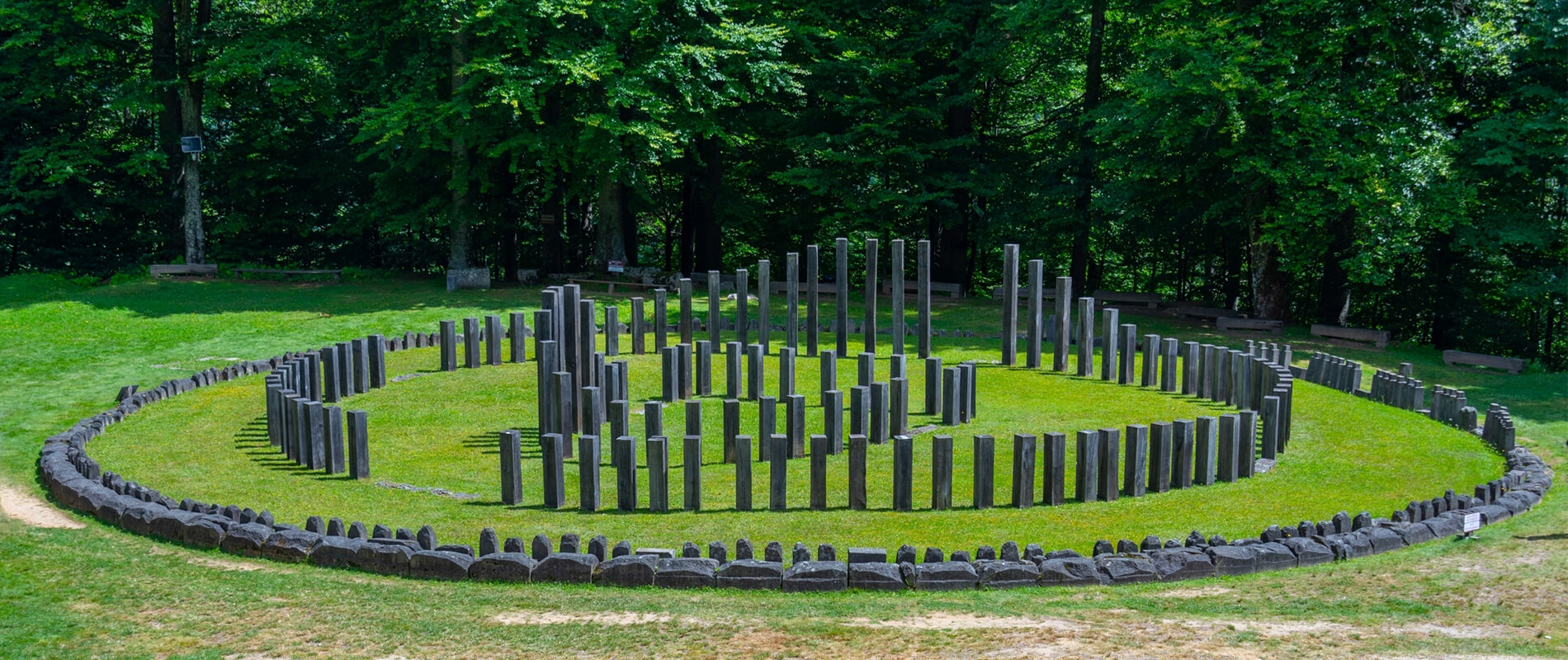 Sarmizegetusa Regia,Romania

 Vicus Caprarius- the City of Water,Italy
You may also like
 The natural swimming pool of Marina Serra,Italy
The Plains of Castelluccio,Italy
Vicus Caprarius- the City of Water,Italy
Sarmizegetusa Regia,Romania
Vicus Caprarius- the City of Water,Italy
The natural swimming pool of Marina Serra,Italy
The Plains of Castelluccio,Italy
Vicus Caprarius- the City of Water,Italy
Sarmizegetusa Regia,Romania
Vicus Caprarius- the City of Water,Italy

Do you want to receive news, promotions and all the exclusive contents by MyBestPlace? Subscribe our newsletter and get ready to travel!


