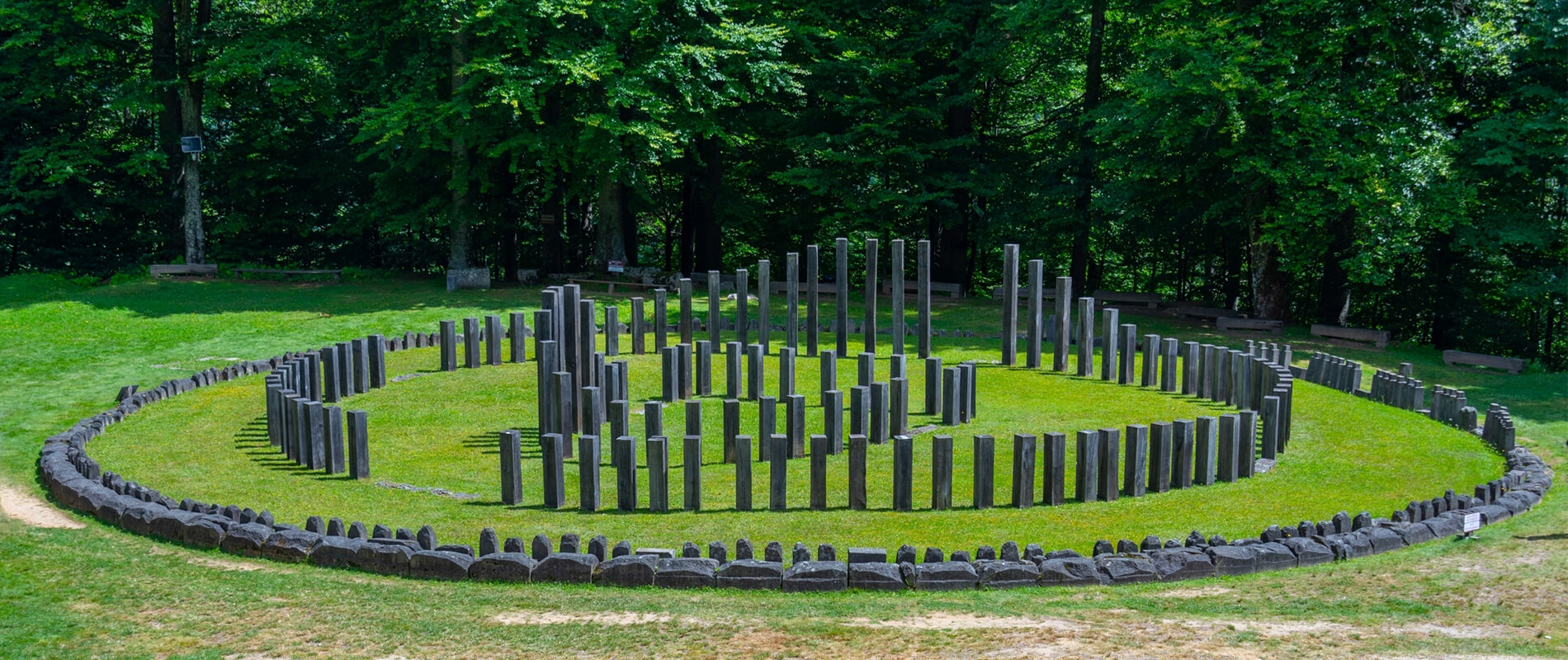

Sarmizegetusa Regia,Romania
Sarmizegetusa Regia is located in the heart of the Orastie Mountains, in the Transylvania region of Romania. Standing at about 1,200 meters above sea level, within the Gradistea Muncelului Cioclovina Natural Park, it was the ancient capital of Dacia, the most important political, military, and religious center of the Dacians before the Roman conquest. Declared a UNESCO World Heritage Site, it belongs to a complex of Dacian fortresses that showcase a sophisticated urban and defensive organization, perfectly adapted to the surrounding mountain landscape. For travelers who love to combine nature, history, and archaeology, reaching this site means immersing themselves in an environment that still preserves a rare sense of authenticity.

Walking among the ruins of Sarmizegetusa Regia, visitors encounter a network of stone walls, artificial terraces, and an ingenious water management system that highlights the advanced engineering of the Dacians. The most iconic element of the site is the Great Circular Sanctuary, a structure of magnetic charm that immediately invites comparisons with Europe’s famous megalithic sites, while maintaining unique features tied to Dacian culture. Alongside the religious remains are traces of residential areas and fortifications, which allow one to imagine the daily life of a civilization capable of resisting Roman expansion for a long time. The end of Sarmizegetusa Regia was as dramatic as its existence. Between 101 and 106 AD, it was the stage for the epic final clash between the legions of Emperor Trajan and the armies of Decebalus, the last king of Dacia. The ruins we see today bear the silent but tangible marks of this fury: layers of ash and traces of intense fires that coincide with historical accounts of the Roman conquest.
The path through the site is marked by informative panels that make historical understanding easier and render the visit accessible even without a guide, though the experience is greatly enriched when accompanied by local archaeologists.

Reaching Sarmizegetusa Regia requires a certain spirit of adventure, as the site is not directly served by large tourist infrastructures, and this is precisely what preserves its unspoiled charm. Access is through a scenic road that winds through dense beech and oak forests, offering seasoned travelers the opportunity to live an experience that goes beyond a simple archaeological visit. Once there, visitors are welcomed by a suspended atmosphere, where the silence of the mountains amplifies the sense of connection with a distant past. For those in search of places that tell authentic stories, far from the most crowded tourist circuits, Sarmizegetusa Regia is a destination that blends culture, nature, and introspection, revealing itself as one of the most unique and evocative sites in Romania.

"The photos on this site are owned by users or purchased from image banks"
#Archeology
#Temple
#Sculptur
You may also like
 Porumbacu de Sus,Romania
 Statua di Decebalo,Romania
 Cimitirul Vesel,Romania

 Salina Turda,Romania
 The Enchanted Castle of Sciacca,Italy
 Necropoli di San Giuliano,Italy


You may also like
Porumbacu de Sus,Romania
Statua di Decebalo,Romania
Cimitirul Vesel,Romania
Salina Turda,Romania
The Enchanted Castle of Sciacca,Italy
Necropoli di San Giuliano,Italy

Do you want to receive news, promotions and all the exclusive contents by MyBestPlace? Subscribe our newsletter and get ready to travel!