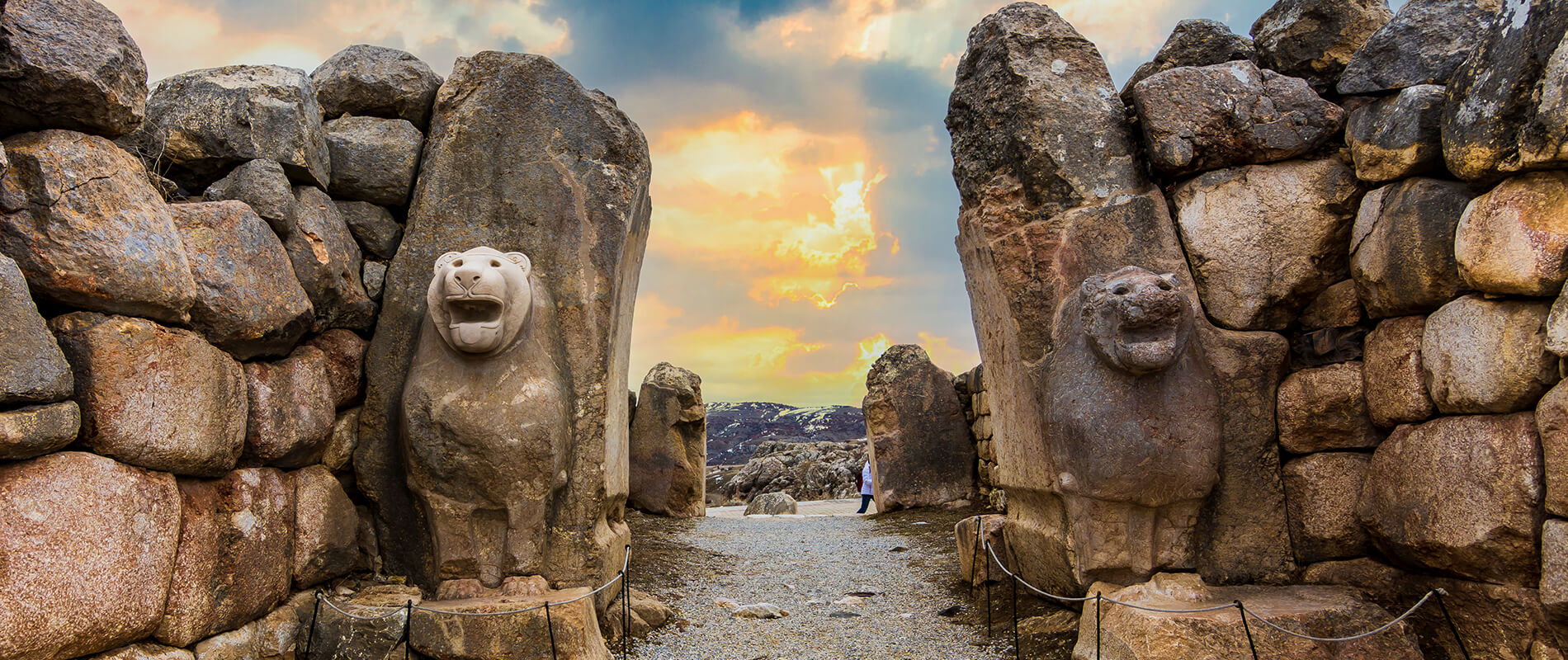

Hattusa,Türkiye
Hattusa, the ancient capital of the Hittite Empire, lies in present-day central Turkey, about 200 kilometers east of Ankara, near the village of Boğazkale, in the province of Çorum. The area stretches across a vast hilly plateau, framed by valleys and streams, offering travelers a landscape where nature and archaeology blend in a striking way. Declared a UNESCO World Heritage Site in 1986, Hattusa is not merely a site of ruins: it is the living testimony of one of the most influential civilizations of the Bronze Age, which dominated the region between the 17th and 12th centuries BC. A journey back in time to the capital of the ancient and mysterious Hittite Empire, a Bronze Age superpower that rivaled Pharaoh’s Egypt and Mesopotamia. Reaching it requires a car and the willingness to leave the coast behind, but the reward is total immersion in a forgotten world, where every stone carries a story of power, intrigue, and stormy gods.

What makes Hattusa truly unique is its titanic architecture and the meticulous texts that have swept away centuries of speculation. Forget simple ruins: here the city walls, stretching for kilometers, are built with stone blocks so massive they once inspired theories of a race of giants (the “Cyclopean theory” has long been abandoned; they were skilled engineers). You will pass through the majestic Lion Gate, guarded by fierce stone beasts, and the enigmatic Sphinx Gate, the ceremonial entrance to the most sacred sanctuaries. But the true masterpiece is the King’s Gate, with its enigmatic bas-relief of a warrior god once mistaken for a queen, now recognized as a representation of the city’s protective deity. The most astonishing revelation, however, came not within the walls but in the royal archives: over 30,000 clay tablets inscribed with cuneiform characters. These texts, deciphered only in the 20th century, are not mere king lists but actual international treaties, such as the famous Treaty of Kadesh with Ramses II’s Egypt, the oldest known written peace agreement in the world. They reveal a complex society, advanced laws, and a pantheon of a thousand deities.

Exploring Hattusa means walking onto the stage of global diplomacy 3,500 years ago. The city was not only a fortress but also a crossroads of cultures, connected to the known world through a network of embassies and communications. The site unfolds in two parts: the lower city, with its great temples and storehouses, and the upper city, perched on the hill, with its sanctuaries and royal residence. A short distance away, the rock sanctuary of Yazılıkaya completes the experience: a natural canyon transformed into an open-air temple, where hittite gods are carved in bas-relief in an eternal procession along the rock walls. Visiting Hattusa today is not just a checkmark on a map, but a pilgrimage into the mind of a people who shaped the ancient world, leaving tangible traces of ingenuity, spirituality, and power.

"The photos on this site are owned by users or purchased from image banks"
#Sculptur
#Archeology
#Temple
You may also like
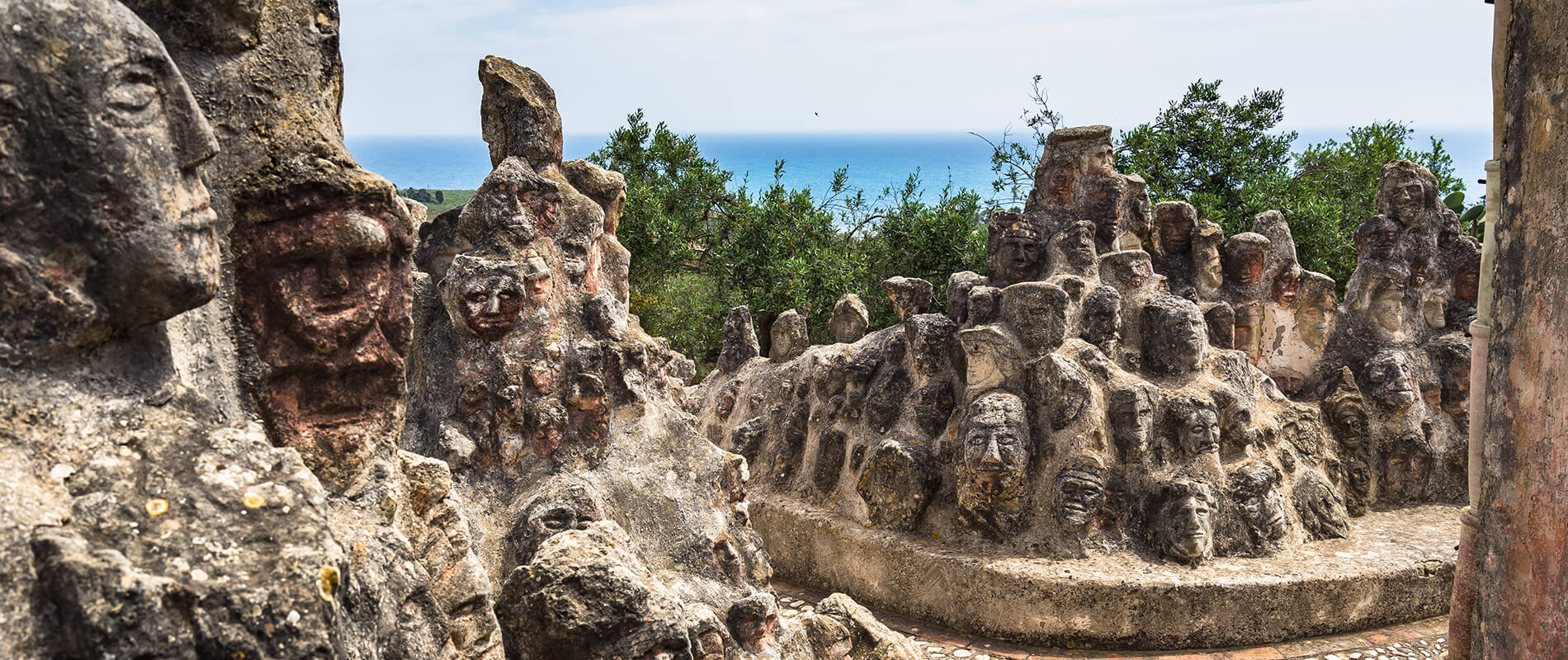 The Enchanted Castle of Sciacca,Italy
 Necropoli di San Giuliano,Italy
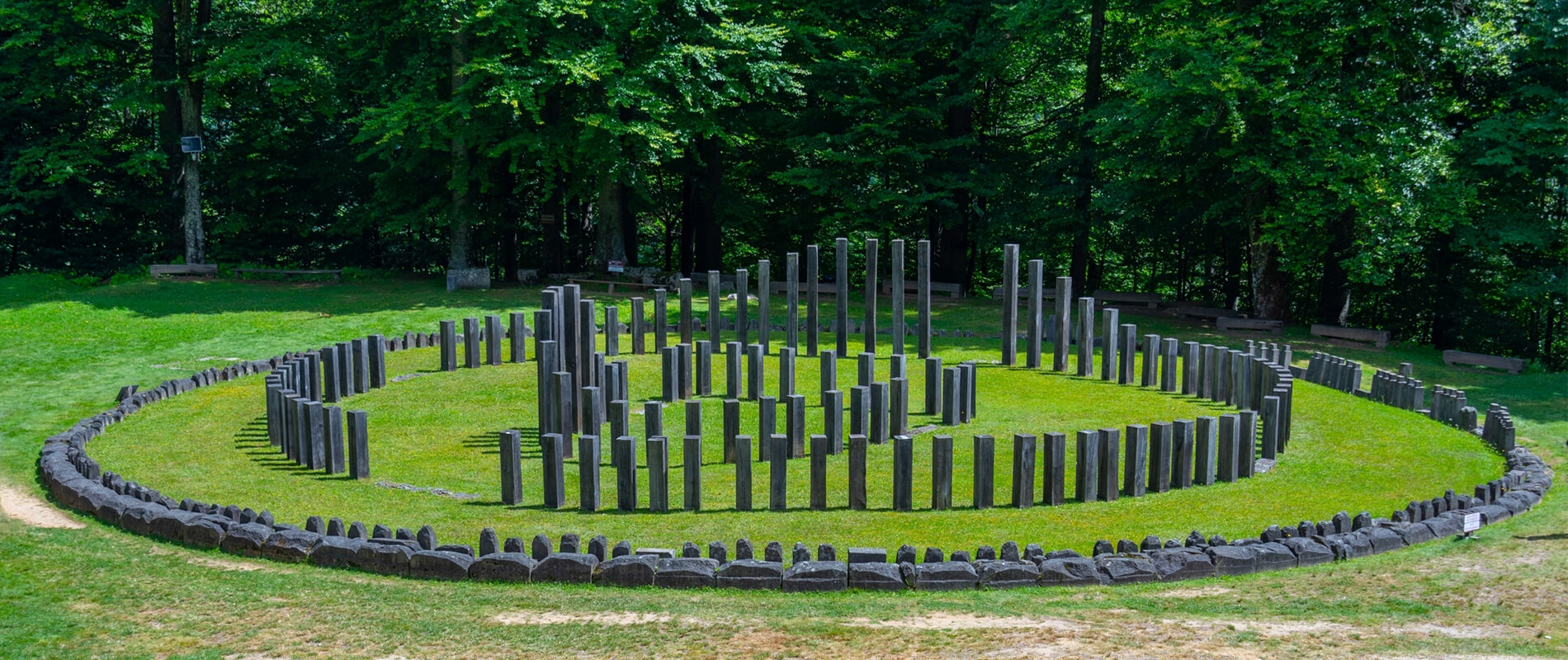 Sarmizegetusa Regia,Romania


You may also like
The Enchanted Castle of Sciacca,Italy
Necropoli di San Giuliano,Italy
Sarmizegetusa Regia,Romania

Do you want to receive news, promotions and all the exclusive contents by MyBestPlace? Subscribe our newsletter and get ready to travel!