


Venice,Italy
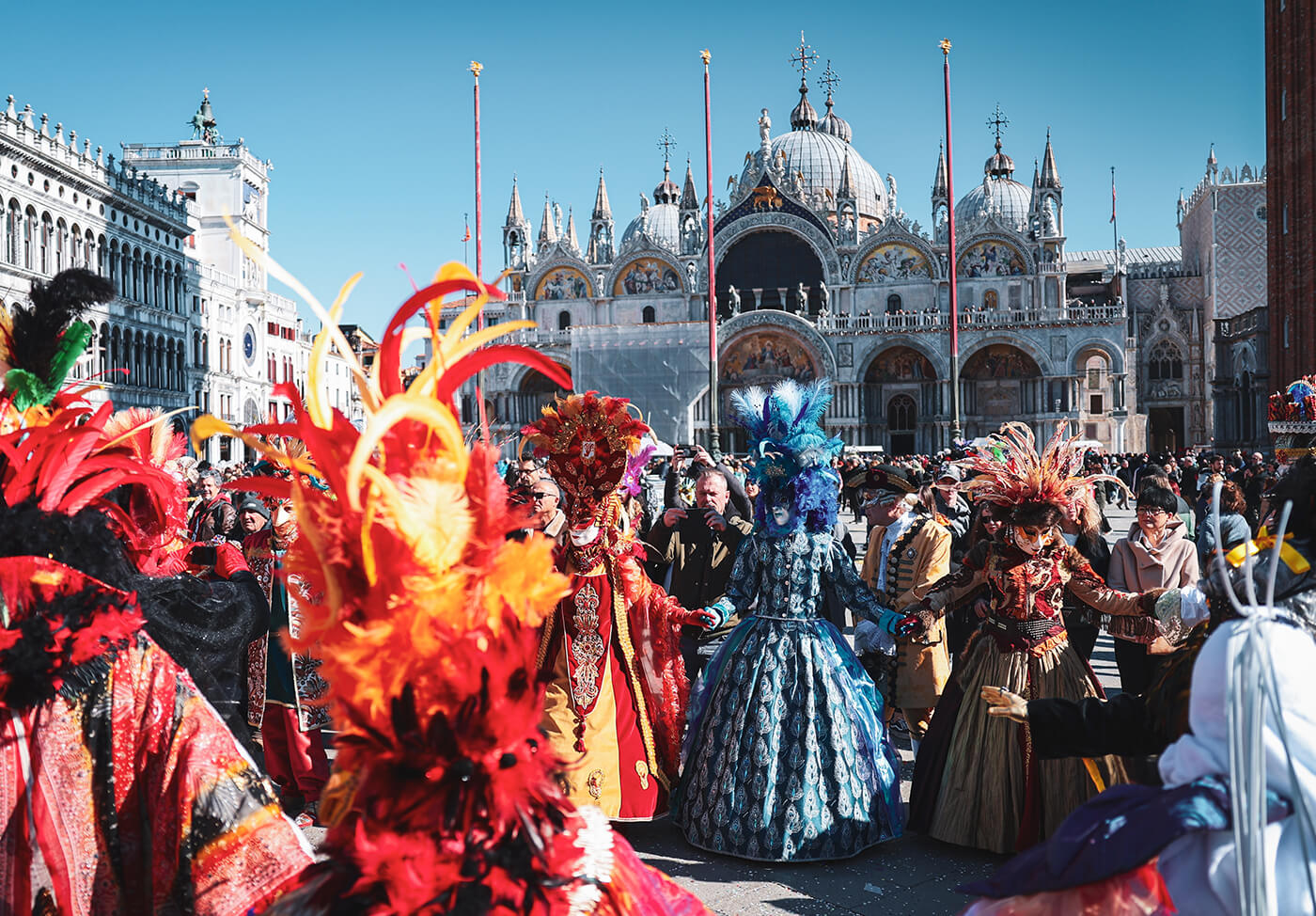
Venice rises in the heart of the Venetian lagoon, along the northeastern coast of Italy, facing the Adriatic Sea. It is an archipelago of more than a hundred islands connected by bridges and canals, a labyrinth of stone and water unlike any other in the world. Here, among narrow streets, small squares, and Byzantine palaces reflected in the waves, one of the most extraordinary events in European culture takes place every year: the Carnival of Venice. It is not a simple masquerade, but an identity ritual that intertwines art, history, and theatricality. The city itself, with its oblique light and shimmering reflections, becomes an open-air stage where anonymity turns into freedom and every corner is tinged with mystery. The main setting is St. Mark’s Square, dominated by the Basilica of the same name and the Doge’s Palace, but the entire city comes alive in a mosaic of performances, water parades, shows, and costume balls spread throughout the streets, squares, and historic palaces.
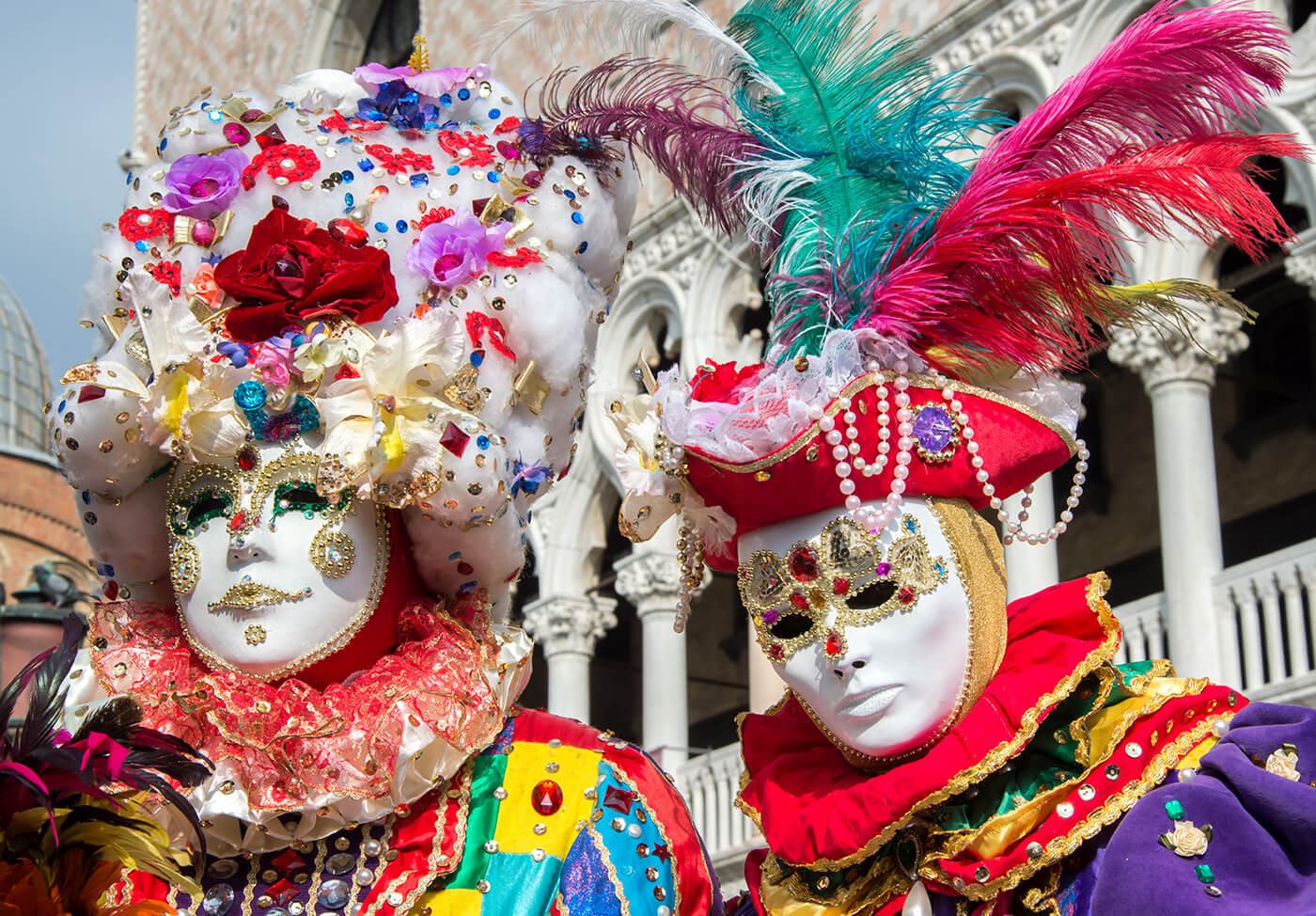
The first official records of the Carnival of Venice date back to a decree of the Senate of the Republic issued in 1296, which established the day before Lent as a public holiday. However, its roots reach further back, to popular celebrations that combined play and social escape within a strictly hierarchical society. During Carnival time, the mask became a symbol of temporary equality: nobles and commoners were indistinguishable behind the same anonymous face, briefly overturning the rules of the Serenissima Republic. The most famous masks, such as the Bauta, with its white face and black tricorn, or the Moretta, enigmatic and silent, were not mere ornaments but tools of social and political expression. After the decline that followed the fall of the Serenissima in 1797 and a long silence throughout the nineteenth century, the Carnival experienced a modern rebirth in 1979, supported by local institutions and cultural associations. Since then, it has once again become a symbol of the most authentic and visionary Venice, able to blend historical memory with contemporary spectacle.
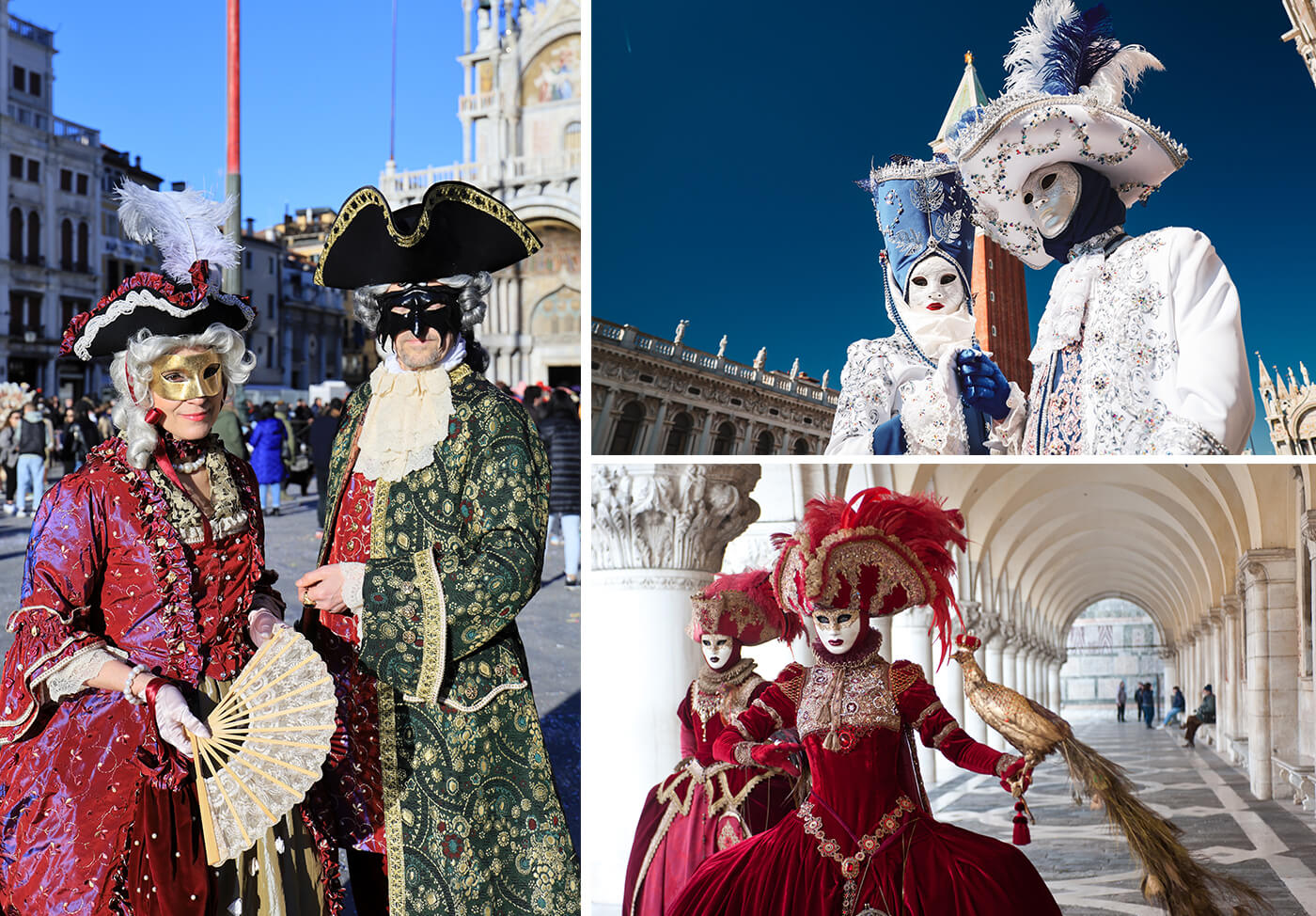
To experience the Carnival of Venice today means to immerse oneself in a world suspended between reality and performance. Every detail, from the baroque masks to the silks of the costumes, from the wax scent of lanterns to the muffled sound of footsteps on the water, creates a unique sensory landscape. The official opening is marked by the famous Flight of the Angel, when a costumed figure descends from the bell tower of St. Mark’s, evoking ancient Renaissance traditions. In the days that follow, the entire city transforms into a succession of parades, masked balls, and theatrical performances, hosted in noble palaces, historic theaters, and even along the canals. Yet beyond the aesthetic, what stands out is the continuous dialogue between past and present: the streets become living art galleries, the costumes tell of the skill of Venetian artisans, while the lagoon, with its winter light, amplifies every reflection and every emotion. For those who observe with an expert eye, the Carnival is not merely an event but a total representation of the city itself, an experience in which Venice contemplates and reinvents itself, remaining faithful to its deepest vocation, that of being a stage for the world.
Official website: Carnevale di Venezia
"The photos on this site are owned by users or purchased from image banks"
#Fiest
#Festival
#Carnival
You may also like
 The natural swimming pool of Marina Serra,Italy
 The Plains of Castelluccio,Italy
 Vicus Caprarius- the City of Water,Italy

 Cabalgata de los Reyes Magos,Spain


 The Flower Festival of Noto,Sicily

You may also like
 The natural swimming pool of Marina Serra,Italy
The Plains of Castelluccio,Italy
Vicus Caprarius- the City of Water,Italy
Cabalgata de los Reyes Magos,Spain
The Flower Festival of Noto,Sicily
The natural swimming pool of Marina Serra,Italy
The Plains of Castelluccio,Italy
Vicus Caprarius- the City of Water,Italy
Cabalgata de los Reyes Magos,Spain
The Flower Festival of Noto,Sicily

Do you want to receive news, promotions and all the exclusive contents by MyBestPlace? Subscribe our newsletter and get ready to travel!


