
Bacalar Lagoon,Mexico
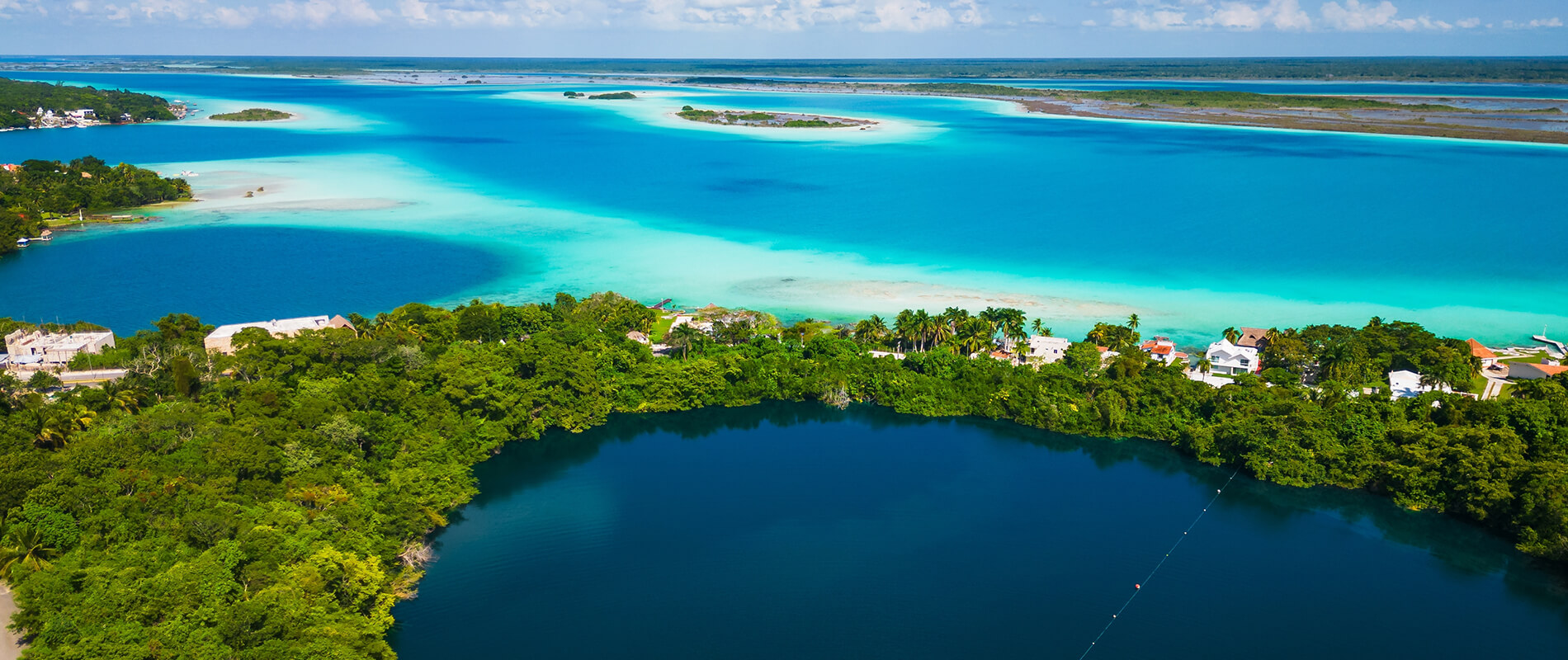
The Bacalar Lagoon is located in southeastern Mexico, in the state of Quintana Roo, just a few kilometres from the border with Belize. It extends for more than 40 kilometres along a narrow strip running parallel to the Caribbean coast, yet it is not directly connected to the sea. It is a freshwater lagoon system fed by underground springs and cenotes. The small town of Bacalar overlooks its western shore, maintaining a discreet profile and still largely untouched by the more invasive tourist dynamics of the Riviera Maya. What makes Bacalar immediately recognisable is its famous designation as the “Lagoon of Seven Colours”. This is not a purely poetic expression, but an observable optical phenomenon: variations in depth, the limestone composition of the seabed, and the angle of sunlight generate a range of tones that shift from the lightest turquoise to deep blue. This phenomenon is especially visible on clear days, when the water becomes a constantly changing, almost unreal surface.

The Bacalar Lagoon is the result of a complex geological structure typical of the Yucatán Peninsula. The area is mainly composed of highly permeable limestone, which over millennia has favoured the formation of underground cavities and waterways invisible on the surface. The lagoon is fed precisely through this hidden hydrological system, with inputs from cenotes and aquifers, keeping the water extraordinarily clear and low in sediment. One of the most scientifically significant features is the presence of stromatolites, organo-sedimentary structures among the oldest forms of life on Earth. These organisms, still active in the lagoon, contribute to the formation of the seabed and represent an extremely delicate ecosystem.
From a historical perspective, Bacalar was an important settlement of the Maya civilisation, known as “Sian Ka’an Bakhalal”, and served as a relevant commercial hub along inland trade routes. With Spanish colonisation, the area gained military importance: in the 17th century, Fort San Felipe was built as a defensive structure to protect against pirate raids along the Caribbean coast.

The lagoon’s shores alternate between sandy stretches and wilder areas where tropical vegetation meets the water’s edge. Among the most notable sites is the Canal de los Piratas, a natural passage later expanded during the colonial era, today recognisable for its shallow waters and strikingly pale shades. Not far away, Cenote Azul represents one of the deepest areas of the lagoon system, with walls that drop sharply into an intense blue, creating a strong contrast with the surrounding shallows. Main activities include kayaking, low-impact boat excursions, and swimming in calm, transparent waters. The wind, steady yet never harsh, also makes Bacalar a popular destination for light sailing. The absence of wave motion and the limited presence of tourist infrastructure foster a direct and immediate relationship with the environment. In this subtraction of noise, excess, and construction, Bacalar defines its most authentic identity and establishes itself as a unique and unforgettable destination.

"The photos on this site are owned by users or purchased from image banks"
#Lake
You may also like


 Monarch Butterfly Biosphere Reserve,Mexico





You may also like
Monarch Butterfly Biosphere Reserve,Mexico

Do you want to receive news, promotions and all the exclusive contents by MyBestPlace? Subscribe our newsletter and get ready to travel!