


Mustang,Nepal
The Mustang Caves are a series of over 10,000 caves excavated at 60 meters high and reachable exclusively through professional climbing. This immense number of caves is located on the Himalayan peaks of northern Nepal, specifically in the Mustang District.

Some have one entrance that faces the rocks, while others are grouped and stacked vertically, reaching up to nine levels high.
With a height of several tens of meters, the mystery of these caves still remains today – who dug them out? How were they dug out and what was the purpose of doing so?

By the mid-1990s, a group of Nepalese archaeologists, along with researchers from the University of Cologne began exploring the insides of these caves, finding the remains of a dozen human bones dating back to about 2,000 years ago.
Other cave findings were ancient wall murals which seem to illustrate Buddhist history, suggesting that the Mustang caves had been used in 1000 BC as funerary rooms.
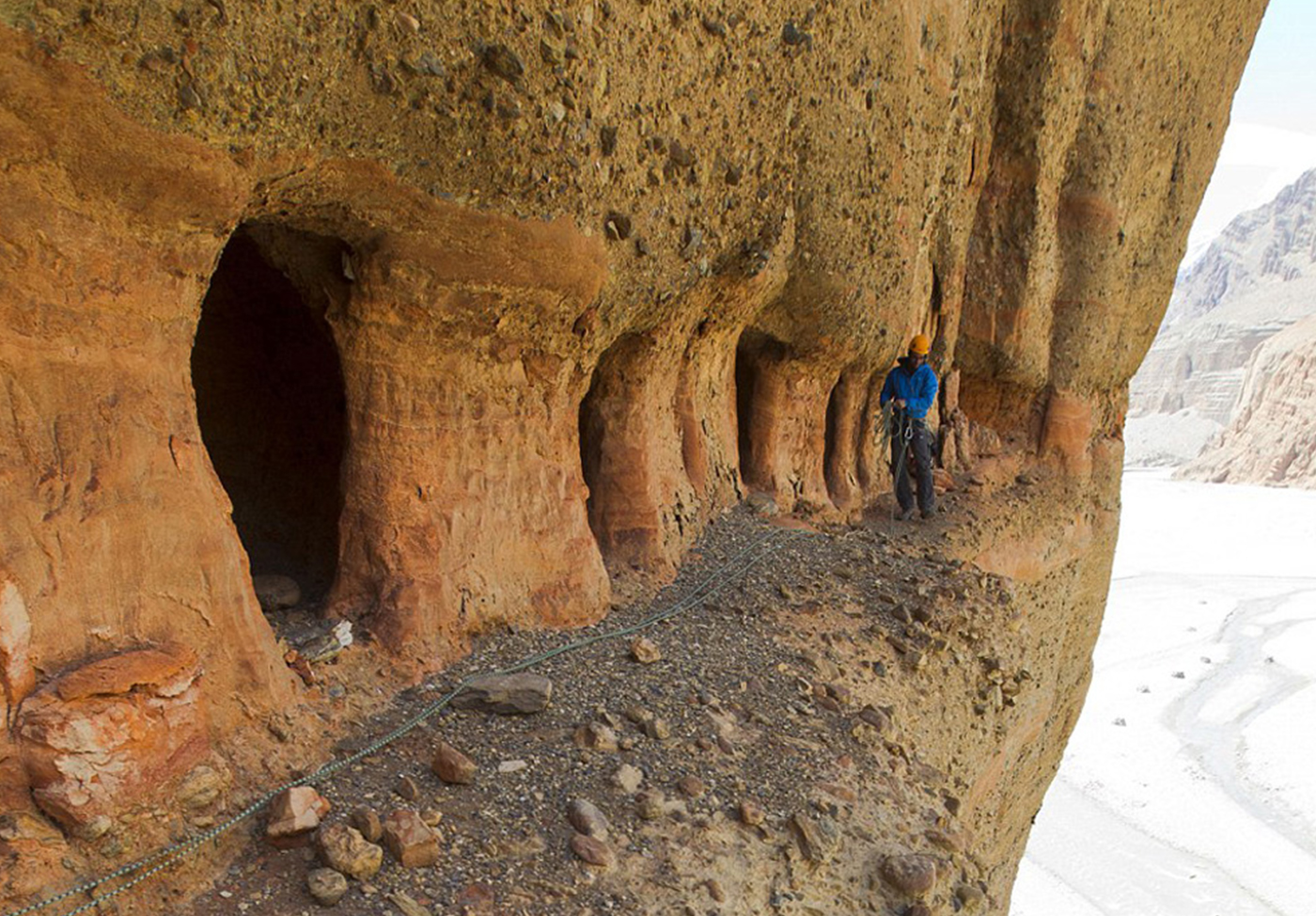
But there were also domestic findings such as household utensils and containers which allow archaeologists to assume that at a later date these caves were used by the ancient local populations as a refuge to escape battles.
Some of these caves have then been transformed into monasteries such as Chungsi Cave, Cave Nyiphuk and the most famous Luri Gompa.

Recently, a team of explorers formed by famous photographer Cory Richard, archaeologist Mark Aldenderfer and climber Pete Athans, visited the site in search of hidden relics and unexplored caves, defining this site as "the largest archaeological site in the world".
"The photos on this site are owned by users or purchased from image banks"
#Caves
#Mountain
You may also like


You may also like

Do you want to receive news, promotions and all the exclusive contents by MyBestPlace? Subscribe our newsletter and get ready to travel!


